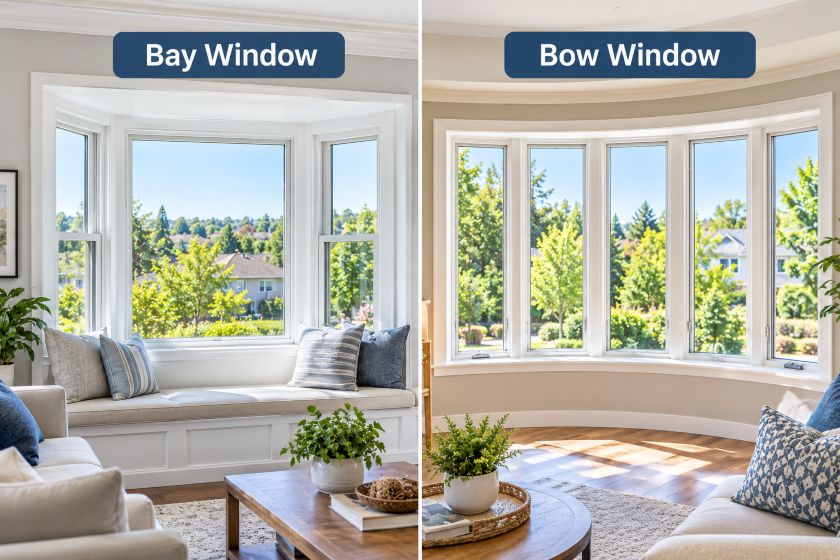
Bay and bow windows are distinctive architectural features that can add natural light, broader views, and visual interest to a home. Because both project outward from an exterior wall, people sometimes mistake them for the same window style. However, their configurations, shapes, and overall appearances differ noticeably.
For homeowners considering replacement windows near Newport Beach, CA, understanding these differences can make it easier to select a window that complements the home’s architecture and serves the room effectively. From the angular lines of a bay window to the gentle curve of a bow window, each option creates its own look and experience.
What Is a Bay Window?
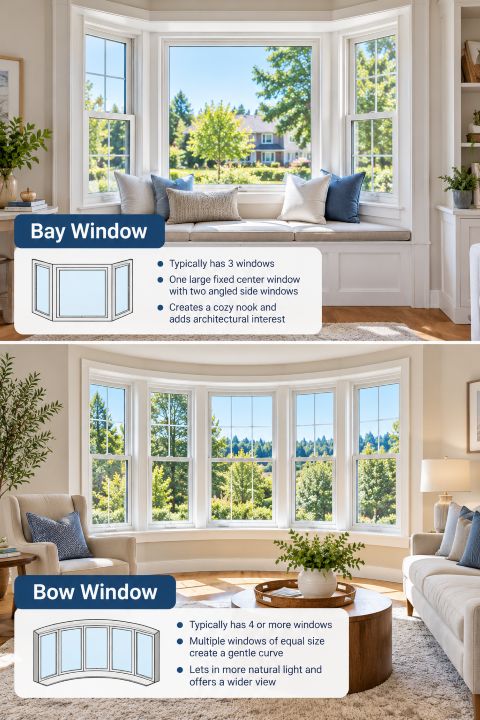
A bay window generally consists of three window sections that project outward from the home’s exterior wall. The center section is typically larger, while two narrower windows are positioned at angles on either side.
This configuration produces a defined, angular appearance. Depending on the window design, the side sections may also be operable, providing ventilation alongside the large central view.
Common characteristics of bay windows include:
- Three primary window sections
- A large central window
- Angled side windows
- A pronounced exterior projection
- Opportunities for additional interior ledge or seating space
- A combination of fixed and operable windows
Their geometric appearance can work particularly well on homes where homeowners want the window to become a noticeable architectural feature.
What Is a Bow Window?
A bow window also projects outward, but its configuration creates a softer, more rounded appearance. Instead of using three primary sections, bow windows commonly consist of four or more similarly sized window units arranged along a gentle curve.
The additional sections create a smoother transition from one window to the next. From outside, this creates a rounded architectural feature rather than the more angular projection of a bay window.
Bow windows are often selected for:
- Broad exterior views
- Increased natural light
- A graceful, curved appearance
- Larger expanses of glass
- Traditional or elegant architectural styles
Because multiple glass sections are incorporated into the design, bow windows can provide views across a wider range of angles.
Bay vs. Bow Windows: The Main Structural Difference
The easiest way to distinguish between the two is to look at the number and arrangement of window sections.
A bay window generally uses three sections positioned at noticeable angles. A bow window usually uses four or more sections arranged to form a gradual curve.
This structural distinction influences several other characteristics, including:
- How far the window projects outward
- Interior space around the window
- Exterior appearance
- Viewing angles
- Natural light distribution
- Ventilation possibilities
Neither configuration is universally better. The right choice depends on the home’s design, available opening, room layout, and homeowner preferences.
Which Option Brings in More Natural Light?
Both styles can dramatically increase the sense of natural light compared with a conventional flat window opening.
Bow windows have multiple glass sections that extend in a curved configuration, allowing light to enter from several directions. This can make them particularly attractive for rooms where maximizing daylight is a priority.
Bay windows also capture light from different angles. Their larger center section can provide a substantial glass area, while the angled side sections bring additional light into the room.
Homeowners should also consider the window’s orientation. The amount of sunlight entering a Newport Beach home can vary depending on whether the opening faces north, south, east, or west, as well as surrounding shade and nearby structures.
How Bay and Bow Windows Affect Interior Space
Because both styles extend beyond the exterior wall, they can create additional usable or decorative space inside the room.
A bay window’s more pronounced projection often creates a deeper interior ledge. Depending on the dimensions and structural design, this area may become a reading nook, display surface, or seating area.
Possible uses include:
- A comfortable window seat
- A reading area
- Space for decorative accents
- An architectural focal point
- An area for indoor plants
Bow windows can also provide an interior ledge, although the curved configuration may create a different spatial effect. Rather than emphasizing depth at the center, a bow window can make the entire wall feel broader and more open.
Which Provides Better Views?
For Newport Beach homeowners, exterior views can be an important part of window selection. Both bay and bow windows can expand sightlines compared with a window installed flush with the exterior wall.
Bay windows offer a large central viewing area with additional perspectives through the angled sides. This configuration can frame a particular landscape or outdoor feature.
Bow windows create a more panoramic effect because their multiple sections follow a gradual curve. Homeowners can see outward from several angles, making the design appealing for rooms overlooking gardens, patios, streetscapes, or other attractive surroundings.
When researching replacement windows, consider what you want to see from inside the room and how the window will look from the exterior.
What About Ventilation?
Ventilation depends on the specific window styles incorporated into the bay or bow configuration.
The center portion of a bay window is frequently fixed, while the side sections may use casement, single-hung, double-hung, or another operable style. Opening the side windows can help introduce fresh air from different directions.
Bow windows may incorporate both fixed and operable units. Because the system has several sections, homeowners may have flexibility in choosing which windows open.
Before choosing a style, consider whether the room relies heavily on natural ventilation. Bedrooms, living spaces, and gathering areas may benefit from strategically positioned operable sections.
Which Architectural Styles Suit Bay and Bow Windows?
Bay windows have strong geometric lines that can complement both traditional and contemporary homes. Their defined angles create a noticeable exterior feature and can add dimension to an otherwise flat façade.
Bow windows have a softer appearance. Their gradual curve is often associated with traditional architecture, although modern materials and streamlined frames can allow them to work with a range of home designs.
In Newport Beach, homeowners should consider the relationship between the new window and existing architectural details, including:
- Rooflines
- Exterior proportions
- Existing window shapes
- Siding or stucco details
- Interior room design
- Overall architectural character
A replacement window should feel integrated with the home rather than appearing visually disconnected from its surroundings.
Consider Energy Performance When Comparing Windows
Bay and bow windows include multiple glass sections, so glass and frame performance matter.
Homeowners in sunny Southern California may want to evaluate features such as Low-E glass, insulated glazing, frame construction, Solar Heat Gain Coefficient, and U-factor.
Opening orientation also matters. A window exposed to strong afternoon sunlight may need different glazing than one protected by shade or on another side of the home.
Quality installation is equally important. Because bay and bow windows project beyond the exterior wall, proper support, sealing, flashing, and alignment help the complete assembly perform as intended.
How to Choose Between a Bay and Bow Window
 Start by considering what you want the replacement window to accomplish. The decision should account for architecture, interior space, views, ventilation, and natural light.
A bay window may be appropriate if you prefer:
- A stronger, angular architectural feature
- Three distinct window sections
- A larger central viewing area
- A deeper interior ledge
- Clearly defined side windows
A bow window may be preferable if you want:
- A softer, curved appearance
- Four or more window sections
- Wide viewing angles
- Abundant natural light
- A graceful transition across the exterior wall
An experienced window professional can evaluate the existing opening and help determine which configuration works appropriately with the structure.
Find the Right Bay or Bow Windows for Your Newport Beach Home
Bay and bow windows share several advantages, but their visual and structural differences can significantly influence a room. Bay windows typically use three sections to create a more angular projection, while bow windows use multiple sections to produce a gradual curve. Both can expand views, bring in natural light, and add architectural character to a home’s exterior.
California Windows can help homeowners compare styles, configurations, glass options, frame materials, and installation requirements based on their property. If you’re exploring replacement windows near Newport Beach, CA, professional guidance can help you choose a bay or bow window that fits your home’s architecture and everyday living spaces.
Connect with California Windows to find a window configuration that brings more light, better views, and distinctive architectural appeal to your Newport Beach home.