Living in Laguna Niguel means enjoying abundant sunshine and a mild Southern California lifestyle, but prolonged sun exposure and warm temperatures can also affect indoor comfort. Windows are a key part of a home’s thermal envelope, and choosing the right products can help limit unwanted solar heat while still letting in natural light.
When exploring replacement windows near Laguna Niguel, CA, homeowners should look beyond appearance and consider glass technology, frame materials, performance ratings, ventilation, and window orientation. Understanding these features makes it easier to choose windows suited to a warm climate and the property’s specific conditions.
What Makes a Window Suitable for a Hot Climate?
Windows can allow heat to enter a home through the glass, frame, and other components. In a sunny climate, selecting products designed to control heat transfer and solar energy can help maintain more consistent indoor temperatures.
Important features to consider include:
- Low solar heat gain performance
- Insulating glass
- Low-E glass coatings
- Durable, thermally efficient frames
- Quality weatherstripping and seals
- Appropriate ventilation options
- ENERGY STAR certification for the applicable climate zone
The ideal combination depends on factors such as window orientation, shade, home design, and how much direct sunlight each opening receives.
Low-E Glass Helps Manage Solar Heat
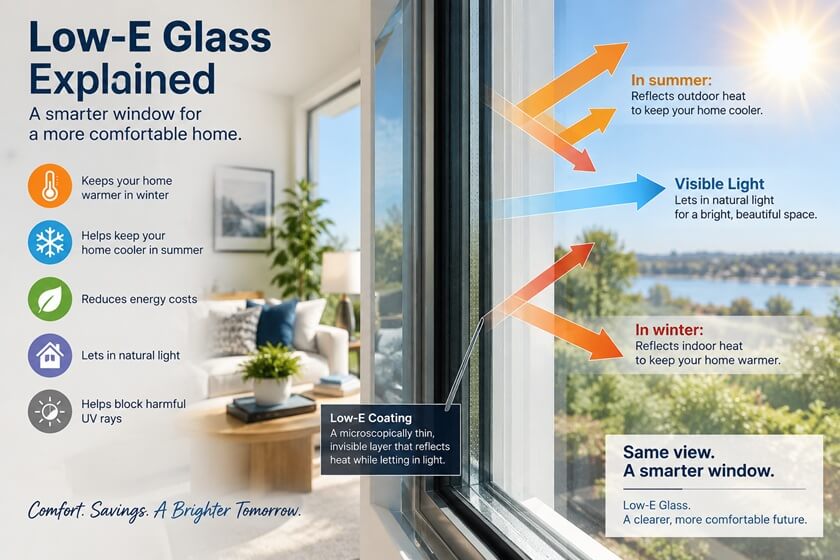
Low-emissivity, or Low-E, glass is one of the most important technologies to consider for homes in warm and sunny areas. Low-E glass incorporates a microscopically thin coating designed to influence how heat passes through the window.
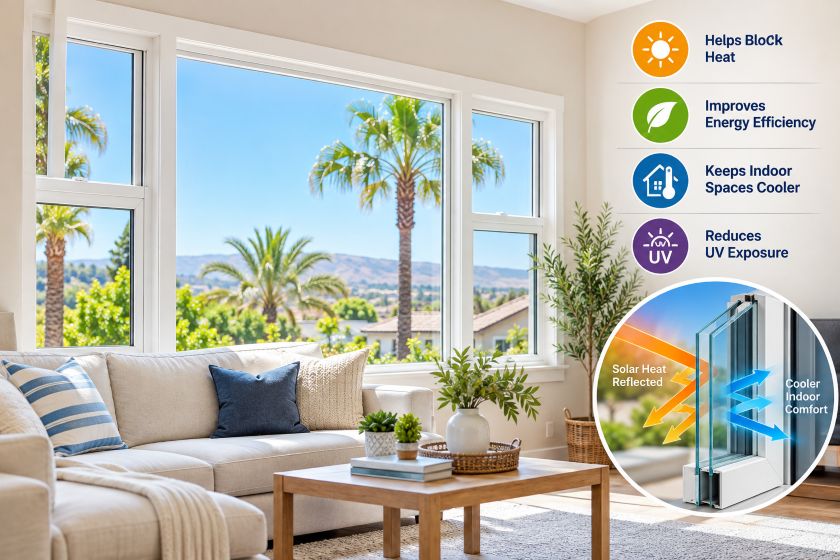
In hot climates, the right Low-E configuration can reduce solar heat entering the home while preserving useful natural light. This is especially valuable for windows that receive strong afternoon sunlight.
Low-E coatings can also help limit ultraviolet exposure to interior furnishings. While no window eliminates UV exposure, suitable glazing can protect flooring, furniture, artwork, and fabrics exposed to sunlight.
Consider Double-Pane Windows for Better Insulation
Single-pane windows provide relatively little resistance to heat transfer. Modern double-pane units use two panes of glass separated by a sealed space, creating an insulating barrier between outdoor and indoor conditions.
For Laguna Niguel homeowners, double-pane windows can support:
- Better thermal performance
- More stable indoor temperatures
- Reduced heat transfer through the glass
- Improved comfort near windows
- Greater protection from outdoor noise compared with many older single-pane designs
The complete window assembly matters, however. Glass, spacers, frames, seals, and installation quality all contribute to overall performance.
Pay Attention to Solar Heat Gain Coefficient
One rating deserves particular attention when selecting windows for a hot climate: Solar Heat Gain Coefficient, commonly abbreviated as SHGC.
SHGC indicates how much solar radiation passes through a window and becomes heat inside the home. Ratings range between 0 and 1. A lower number generally indicates that the window allows less solar heat to enter.
For windows exposed to substantial sunlight, lower SHGC performance can be advantageous. However, window selection should consider the home as a whole, not one rating alone.
Orientation matters too. A west-facing window that receives intense afternoon sunlight may have different performance needs than a shaded north-facing opening.
Understand the Role of U-Factor
SHGC is not the only performance rating homeowners should review. U-factor measures how effectively a window resists non-solar heat transfer.
With U-factor, lower values indicate greater insulating performance. This rating can help homeowners compare how different window assemblies manage heat moving between indoor and outdoor environments.
When researching replacement windows near Laguna Niguel, CA, consider SHGC and U-factor together. One relates primarily to solar heat entering through the window, while the other reflects heat transfer through the overall window assembly.
Vinyl Windows Can Be a Practical Option
Frame material influences thermal performance, maintenance requirements, durability, and appearance. Vinyl is widely used for replacement windows because it offers good insulation and requires relatively straightforward maintenance.
Quality vinyl window frames often incorporate multi-chambered construction. These internal chambers can help reduce heat transfer through the frame.
Vinyl also doesn’t require the same routine finishing as some traditional frame materials, making it practical for homeowners who want durable windows with manageable upkeep.
Product quality still matters. Consider frame construction, reinforcement, glazing, seals, and installation rather than choosing a window solely because it uses a particular material.
Fiberglass Frames Offer Strength and Stability
Fiberglass is another option worth considering for warm-climate homes. It is known for dimensional stability, which helps the frame maintain its shape through changing environmental conditions.
Depending on the particular window system, fiberglass frames can combine strength with good thermal characteristics. Their relatively slim profiles may also appeal to homeowners who want larger glass areas and clean architectural lines.
When comparing fiberglass with vinyl or other materials, homeowners should evaluate the entire window, not just the frame.
Choose Window Styles That Support Ventilation
Energy performance matters, but homeowners should also consider how windows support natural ventilation.
Laguna Niguel’s climate can provide opportunities to bring outdoor air into the home when conditions are comfortable. Operable window styles can make this easier.
Popular options include:
- Casement windows: Hinged along one side and capable of opening outward for substantial ventilation.
- Single-hung windows: Provide ventilation through an operable lower sash.
- Double-hung windows: Allow homeowners to open either sash, depending on the design.
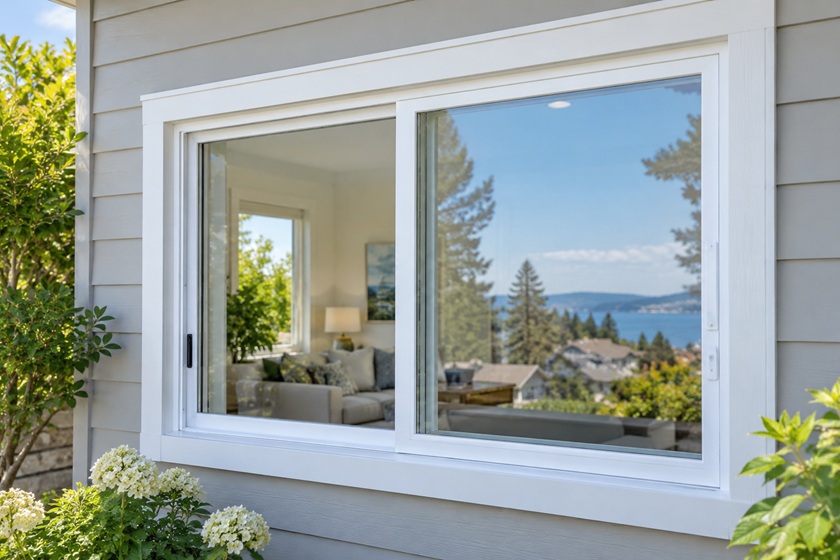
- Sliding windows: Offer straightforward operation and work well in wider openings.
- Awning windows: Hinged at the top and useful in locations where controlled ventilation is desired.
Window placement can also help encourage cross-ventilation when openings are positioned strategically throughout the home.
Consider Each Window’s Orientation
Choosing identical glazing for every opening may not always produce the best result. The amount and intensity of sunlight can vary significantly depending on which direction a window faces.
West-facing windows often receive strong afternoon sun, while south-facing windows may experience extended sun exposure throughout the day. Trees, roof overhangs, nearby buildings, and architectural features can also change how much sunlight reaches the glass.
Before selecting replacement windows, evaluate:
- Direction each window faces
- Hours of direct sunlight
- Existing exterior shade
- Window size
- Room function
- Desired amount of natural light
This room-by-room approach can help homeowners balance daylight, views, ventilation, and thermal performance.
Look for ENERGY STAR and NFRC Information
Performance labels make it easier to compare windows using standardized information.
The National Fenestration Rating Council, or NFRC, provides ratings that can include U-factor, SHGC, visible transmittance, and other performance measurements. These labels allow homeowners to evaluate window products based on tested characteristics rather than appearance alone.
ENERGY STAR certification can also help identify products that meet established energy-performance criteria for applicable climate conditions.
Homeowners should still consider their property’s specific needs, but these labels provide useful reference points during product selection.
Installation Is Part of Window Performance
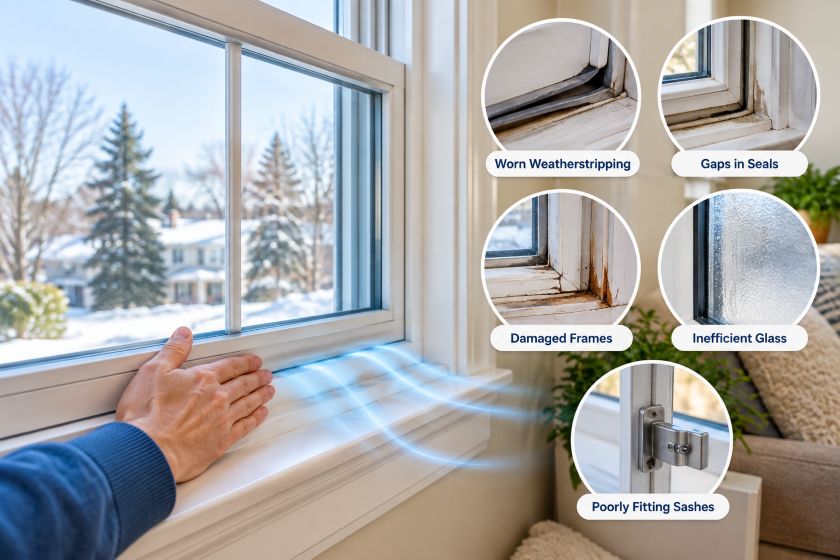
Even a high-performing window needs proper installation. Gaps, inadequate sealing, improper flashing, or poor alignment can compromise the performance homeowners expect from new windows.
Professional installation helps ensure the window fits the opening correctly and integrates properly with the surrounding structure.
Installers can also evaluate existing openings for conditions that should be addressed before installing replacement windows. This is especially important when replacing older products that may have been in place for many years.
Find the Right Windows for Your Laguna Niguel Home
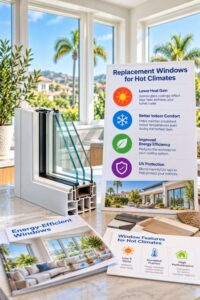 The best windows for a hot climate combine appropriate glass technology, strong insulating performance, suitable frame materials, and proper installation. Low-E coatings, double-pane glass, lower solar heat gain, and carefully selected window styles can all help keep your home more comfortable while preserving the natural light Southern California homeowners value.
California Windows can help homeowners compare window styles, glazing options, performance ratings, and materials based on their property’s specific needs. If you’re considering replacement windows near Laguna Niguel, CA, choosing products designed for the local climate and your home’s sun exposure can deliver better long-term performance.
Connect with California Windows to explore replacement window options suited to your Laguna Niguel home and Southern California’s sunny climate.